
 See My Latest Article on HelloNation
Soapstone countertops are valued for their soft, natural appearance, heat resistance, and ability to develop character over time. They are made from a dense natural stone called steatite and are often chosen for kitchens, utility areas, bathrooms, and other spaces where a matte surface and low-maintenance routine are preferred.
What is soapstone?
Soapstone is a natural stone composed mainly of talc, magnesium, and other minerals. The amount of talc affects how soft, smooth, and dark the material feels. Countertop-grade soapstone is denser and more durable than the softer stone used for carving or decorative objects.
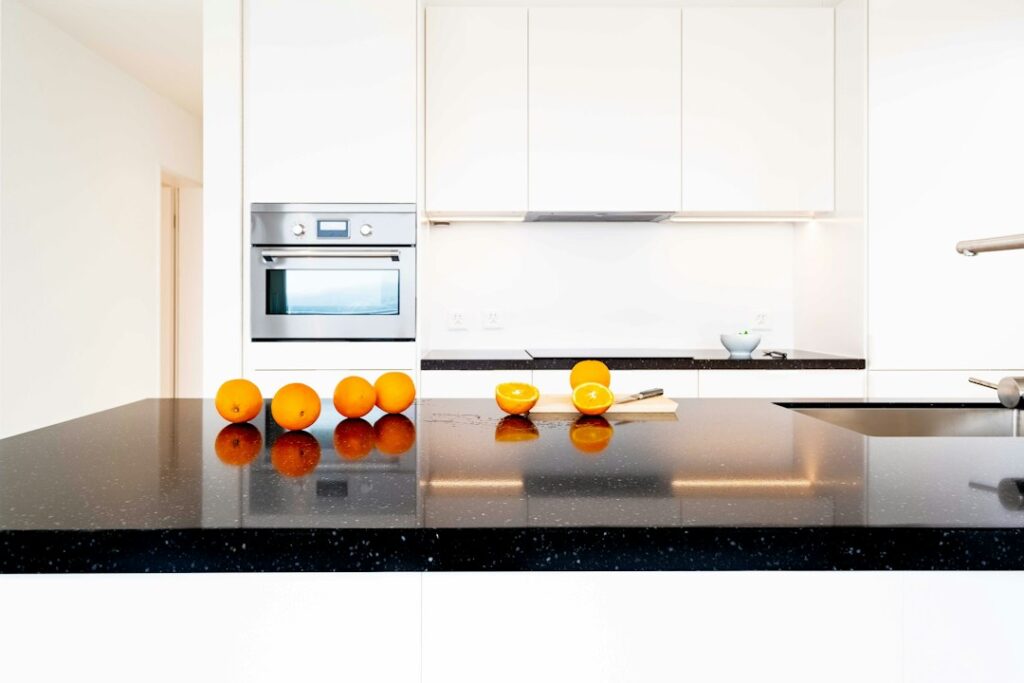
Most slabs range from charcoal gray to soft black, although some contain green, blue, or brown undertones. Veining may be subtle or pronounced, often appearing in shades of white or pale gray. The surface usually has a honed, non-reflective finish rather than the polished appearance associated with many granite or quartz countertops.
The color can deepen after mineral oil or a manufacturer-approved treatment is applied. Some homeowners prefer the naturally lighter look, while others like the darker, more uniform appearance that develops with conditioning.
Is soapstone durable enough for a kitchen?
Yes. Soapstone is durable enough for normal kitchen use, but it behaves differently from harder stones. Its surface is less likely to be damaged by heat, acids, or staining, yet it is more vulnerable to scratches and edge impacts.
Hot cookware can generally be placed on soapstone without causing the thermal shock concerns associated with some other countertop materials. The stone is also highly resistant to household acids, including lemon juice, vinegar, and tomato-based foods. These substances are less likely to etch or dull the surface.
The main durability considerations are:
- Scratches can occur from knives, cookware, tools, or abrasive objects.
- Corners and thin edges can chip if struck forcefully.
- A scratch may be more visible when the surface has been darkened with oil.
- Deep damage usually requires localized repair or refinishing.
Minor scratches are often considered part of soapstone’s natural patina. They can sometimes be blended with fine abrasive materials or mineral oil, depending on their depth and location.
Does soapstone stain?
Soapstone is highly resistant to staining because it is very dense and has low porosity. Spilled coffee, cooking oil, wine, and acidic foods generally remain on the surface long enough to be wiped away without leaving a permanent mark.
This does not mean the stone should be neglected. Grease and food residue can still create a temporary dark spot or uneven appearance. Routine cleaning with mild dish soap and water is usually sufficient.
Unlike many porous natural stones, soapstone typically does not require periodic sealing. That can simplify maintenance, especially in kitchens where food preparation, moisture, and frequent cleaning are part of daily use.
What maintenance does soapstone require?
Soapstone maintenance is simple, but the desired appearance determines the routine. A naturally aging surface can be cleaned with mild soap and water and allowed to change gradually. A darker, more consistent finish may require occasional mineral oil or a specialized soapstone treatment.
Mineral oil does not seal the stone in the same way a penetrating sealer works on porous materials. Instead, it temporarily darkens the surface and can help make small scratches less noticeable. The effect fades over time, particularly in areas that receive frequent use.
For everyday care:
- Wipe spills with a soft cloth or sponge.
- Use mild dish soap for routine cleaning.
- Avoid harsh scouring powders and abrasive pads.
- Do not use cutting tools directly on the surface.
- Clean up heavy grease to prevent temporary discoloration.
- Follow the fabricator’s guidance for oiling or surface conditioning.
Households in Kernersville may also notice changes related to seasonal indoor humidity and heating or cooling cycles. These changes usually do not harm soapstone, but they can affect how quickly mineral oil appears to fade or how visible surface variation becomes.
Is soapstone suitable for bathrooms and utility areas?
Soapstone can work well in bathrooms because it handles moisture and common cosmetic products effectively. Water does not usually penetrate deeply, and ordinary soap, shampoo, and toothpaste are unlikely to cause permanent staining.
It can also be practical for laundry rooms, mudrooms, fireplace surrounds, and work areas. Its resistance to heat makes it useful around wood-burning or gas-heated features when the complete installation is designed for that purpose.
The stone is not automatically the right choice for every setting. Areas with heavy impact, frequent dragging of equipment, or very thin exposed edges may require extra care. The surrounding cabinetry and support structure also need to be appropriate for the weight of a natural stone slab.

How does fabrication affect soapstone countertops?
Fabrication decisions influence both appearance and long-term performance. Soapstone can be cut for sinks, cooktops, outlets, backsplashes, and other features, but every opening creates a location that must be measured and supported carefully.
Edge profiles are especially relevant. A slightly eased edge can reduce the chance of chipping compared with a sharp, narrow edge. Rounded corners may also be sensible in active kitchens or homes with children because they reduce exposed points.
Seams are usually visible to some degree, particularly where two slabs meet or where the pattern changes. Because soapstone often has a relatively consistent background color, a well-planned seam may blend in, but natural variation can still make it noticeable.
Sink installation also affects maintenance. An undermount sink creates a smooth transition for wiping water and food into the basin, while a drop-in design may be useful where cabinet or structural conditions limit other options.
What are common misconceptions about soapstone?
One misconception is that soapstone is fragile because it feels softer than granite. The surface is softer, but softness does not mean it cannot serve as a countertop. It means the material has a different pattern of strengths and weaknesses.
Another misconception is that all soapstone must be oiled regularly. Oiling is optional and primarily affects color and appearance. A homeowner who prefers natural variation may choose not to oil the surface.
Some people also assume that scratches permanently ruin the countertop. Many light scratches can blend into the evolving patina, and localized repairs are possible in many cases. However, severe impact damage or a cracked section may be more difficult to correct.
How should homeowners compare soapstone with other countertop materials?
Soapstone may be a good fit for households that value:
- Heat resistance near cooking areas
- Strong resistance to staining and acids
- A matte, natural appearance
- Minimal sealing requirements
- A surface that develops visible character
A different material may be more suitable for someone who wants a highly polished finish, maximum scratch resistance, a broad range of uniform colors, or a surface that remains visually unchanged. The most useful comparison includes more than initial appearance. Consider cooking habits, tolerance for scratches, edge design, sink style, cleaning preferences, and willingness to accept natural aging.
For homes in Kernersville, practical decisions may also include the kitchen’s exposure to bright sunlight, the amount of outdoor dirt brought indoors, and how often the space is used for cooking or entertaining. Soapstone is forgiving in many of these conditions, but its softer surface rewards reasonable care.
What should be checked before installation?
Before fabrication begins, confirm the slab’s color, veining, thickness, edge treatment, sink opening, cooktop cutouts, backsplash plan, and seam locations. Natural stone varies from slab to slab, so a small sample may not represent the complete countertop.
Cabinet levelness and support should also be reviewed. Soapstone is heavy, and unsupported spans or weak cabinet sections can create installation problems. Plumbing, appliances, and electrical components should be measured accurately before cutting.
A clear understanding of the intended finish is useful as well. Decide whether the surface should remain naturally gray, be darkened with mineral oil, or receive another approved treatment. That choice affects the early appearance and the way scratches and wear are perceived.