
 See My Latest Article on HelloNation
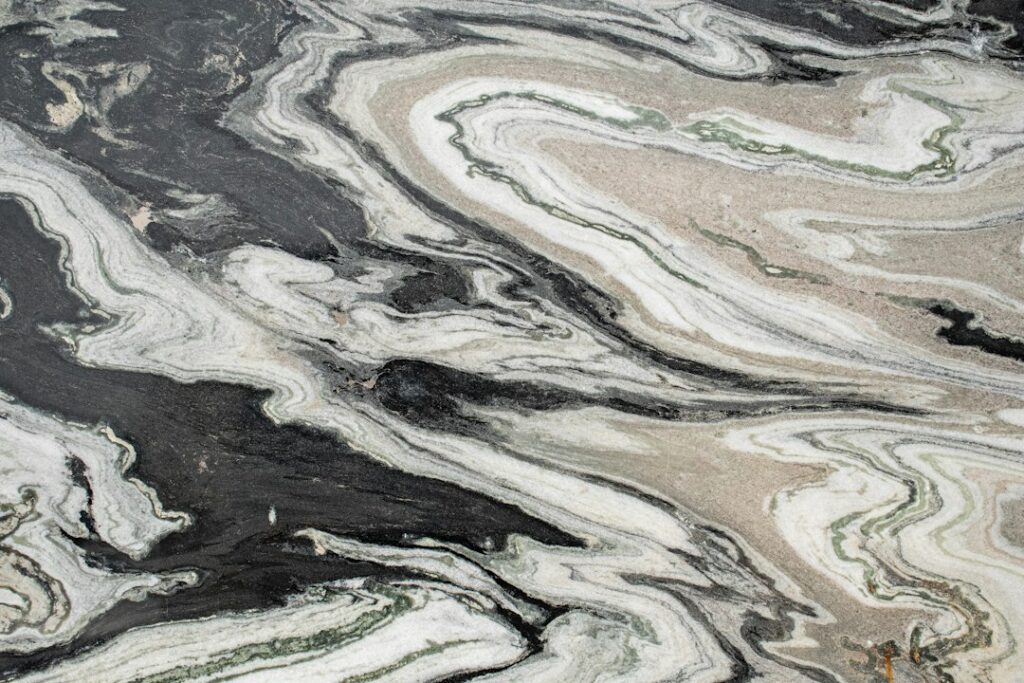
Stone countertop finish affects more than appearance. It changes how the surface reflects light, how visible fingerprints and crumbs may be, how natural markings appear, and how much routine maintenance the countertop may require.
For homeowners in Kernersville, NC, choosing between polished, honed, and leathered stone often depends on lighting, cooking habits, water exposure, and the overall character of the room. The right finish is not simply a matter of which surface looks most attractive in a sample.
What is a stone countertop finish?
A finish is the final texture and visual treatment applied to the exposed surface of a stone slab. Fabrication removes saw marks, smooths the material, and creates a selected level of sheen or texture.
The finish does not change the stone’s basic composition. Granite remains granite, quartzite remains quartzite, and marble remains marble. However, the finish can influence how the stone’s color, veining, porosity, and surface variations are perceived.
The three commonly discussed options are:
- Polished: Smooth and reflective, with a noticeable shine.
- Honed: Smooth but low-sheen, with a soft matte appearance.
- Leathered: Textured and usually low-sheen, with natural variation that can be felt by hand.
What does a polished finish look and feel like?
A polished finish is highly smooth and reflective. It brings out strong color contrast, highlights veining, and gives the surface a brighter appearance under overhead or natural light.
The surface feels slick and glass-like. This finish is widely used for kitchen countertops, bathroom vanities, fireplace surrounds, and other areas where a clean, reflective appearance is desired.
Polished stone can make darker materials appear richer and more dramatic. It may also help lighter countertops reflect more light in rooms with limited daylight. In area homes with open kitchens, polished surfaces can visually connect countertops with surrounding cabinetry, flooring, and light fixtures.
Advantages of polished stone
- Strong color depth and visual contrast
- Smooth, easy-to-wipe surface
- High resistance to staining when the stone is properly selected, sealed when needed, and maintained appropriately
- Veining and mineral movement are often more pronounced
- Generally familiar and widely available
Potential drawbacks
- Water spots, fingerprints, and smudges may be easier to see on dark or highly reflective surfaces
- Scratches or etching can stand out because they interrupt the shine
- Glare may be noticeable near bright windows or strong ceiling lighting
- The glossy appearance may feel too formal for a rustic or relaxed interior
Polished does not mean maintenance-free. A polished marble surface, for example, can still etch from acidic foods such as lemon juice, vinegar, and tomato-based products. The shine does not make the material chemically resistant.
What is a honed finish?
A honed finish is smooth to the touch but has little or no visible shine. It creates a soft, understated appearance similar to a matte surface.
Honing stops before the stone reaches the reflective stage of polishing. Because light does not bounce sharply off the surface, color may appear more muted and veining may look gentler. Honed stone often suits traditional, farmhouse, transitional, and minimalist interiors.
A honed countertop can be useful in kitchens where glare and visible reflections are concerns. It may also make a large surface feel quieter, especially in open-plan rooms with several competing design elements.
Advantages of honed stone
- Low-glare appearance
- Soft, natural visual character
- Minor fingerprints and light smudges may be less noticeable than on a glossy surface
- Works well with subdued or textured interior materials
- Provides a less formal alternative to polished stone
Potential drawbacks
- Dark honed surfaces may show fingerprints, grease marks, and light-colored residue
- Some stones can show scratches or dull spots more clearly because the surface has no strong shine to disguise variation
- Honed marble and limestone can still etch
- The surface may require more frequent wiping in busy cooking areas
- Honing can slightly change the apparent color of the slab
A common misconception is that honed stone is automatically more stain-resistant or easier to maintain. The finish alone does not determine resistance. The type of stone, its porosity, the quality of fabrication, sealing requirements, and cleaning habits all matter.
What is a leathered finish?
A leathered finish has a textured surface created by brushing or working the stone after it has been smoothed. The exact texture varies by stone and fabrication method. Some leathered surfaces feel lightly pebbled, while others have deeper natural undulations.
Leathering usually produces a low-sheen or satin appearance. It is particularly effective at emphasizing the stone’s natural grain, mineral movement, and surface variation. Granite and some quartzite varieties are commonly considered for this finish, although suitability depends on the specific slab.
The texture can make a countertop feel more tactile and informal. It may work well in kitchens, outdoor covered areas, utility spaces, or rooms designed around natural materials.
Advantages of leathered stone
- Highlights natural texture and mineral structure
- Produces less glare than polished stone
- Can help disguise small crumbs, light smudges, and minor surface irregularities
- Offers more visual depth than a completely flat matte surface
- Creates a distinctive, natural appearance

Potential drawbacks
- Textured areas can require more attention during cleaning
- Spills may collect in shallow depressions if they are not wiped promptly
- The surface may feel less uniform than polished or honed stone
- Not every stone can produce an attractive or consistent leathered result
- Raised texture may be less convenient for rolling dough or sliding appliances across the counter
Leathered stone is not necessarily rough or difficult to clean. A well-executed finish is generally usable for everyday kitchen work, but cleaning cloths may not glide as easily across the surface. A soft brush can sometimes help remove residue from deeper texture without using abrasive products.
Which finish is easiest to maintain?
For most households, polished stone is usually the simplest to wipe clean because its surface is smooth and reflective. Honed stone is also smooth, but it may show grease or residue differently depending on its color and the stone type. Leathered stone can be practical, though its texture may require more deliberate cleaning.
Maintenance depends more on the stone than on the finish alone. Natural stones vary in porosity and chemical sensitivity. Engineered materials have their own care requirements and should be cleaned according to the manufacturer’s guidance.
Basic habits are useful for all three finishes:
- Wipe spills promptly, especially oils, acidic foods, and strongly colored liquids.
- Use a soft cloth or nonabrasive sponge.
- Avoid scouring powders, harsh abrasive pads, and unapproved acidic cleaners.
- Use cutting boards and trivets rather than placing sharp or very hot objects directly on the countertop.
- Check whether the selected stone requires periodic sealing.
Seasonal humidity, tracked-in grit, and frequent indoor cooking can affect cleaning routines in Kernersville households, but the finish itself does not eliminate the need for ordinary care.
Which finish is best for a kitchen?
The best finish depends on how the kitchen is used and how much visual variation is welcome.
A polished finish may suit a kitchen where bright color, dramatic veining, and quick wipe-downs are priorities. A honed finish may be preferable where glare should be limited or a softer appearance is desired. A leathered finish may fit a space that emphasizes natural texture and a less uniform look.
Consider these questions before selecting a finish:
- Is the countertop near strong sunlight or bright task lighting?
- Are dark colors being considered, where fingerprints may be more visible?
- Is the surface used for frequent cooking and food preparation?
- Will the texture interfere with writing, rolling dough, or moving small appliances?
- Does the natural pattern of the slab look better enhanced by shine, softened by honing, or emphasized through texture?
- Is the household comfortable with a finish that develops visible variation over time?
Does the finish affect fabrication and installation?
Yes. The selected finish can affect how edges, sink openings, backsplashes, and seams appear. A polished edge next to a honed top may create a noticeable contrast, while a leathered surface may require careful planning so the edge treatment feels intentional.
The finish can also influence how visible seams are. Strong lighting, directional veining, and reflective surfaces may draw attention to transitions between pieces. Viewing a large sample or the actual slab is more informative than relying on a small showroom sample because texture and pattern can change across the material.
For any stone countertop, precise measurements and safe handling are essential. Large slabs are heavy and can break if improperly supported, especially around sink cutouts, cooktop openings, corners, or long overhangs. Those conditions involve fabrication and installation safety rather than finish preference alone.
Can a finish be changed later?
Sometimes, but not always easily. Polishing, honing, and leathering remove or alter material at the surface. Changing from one finish to another may require specialized equipment, sufficient slab thickness, and access to the entire surface.
A finish change can also affect edge profiles, sink cutouts, backsplash alignment, and the uniformity of adjacent pieces. For that reason, the desired finish is best selected before fabrication begins.
The most practical choice is the finish that matches the stone, the lighting, and the household’s daily habits—not simply the finish that looks best in a small sample.